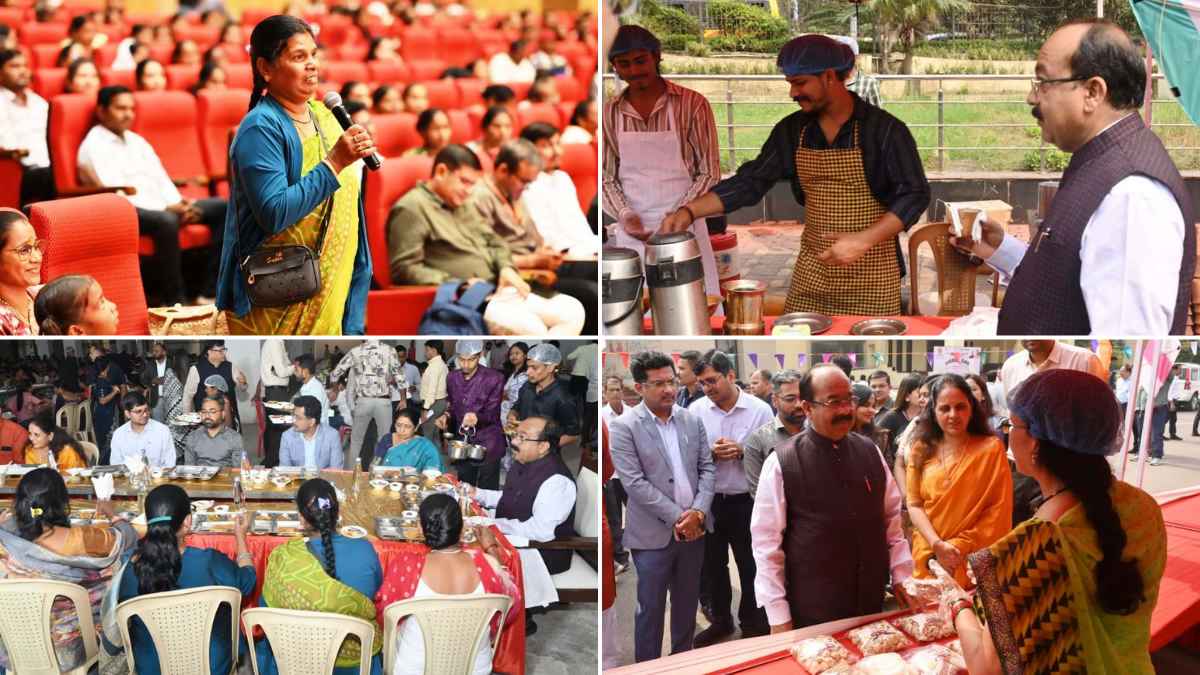
Around 2,500 street vendors and their family members attended the PM SVANidhi Festival in Raipur on November 14, 2026, where the Chhattisgarh government highlighted financial inclusion, digital empowerment and environment-friendly practices.
The state government organised the event at Pandit Deendayal Upadhyay Auditorium, Science College, under the chairmanship of the deputy chief minister, following directions from the Centre. The festival aimed to strengthen street vendors financially and digitally while highlighting their contribution to the urban economy.
The event offered several facilities and activities for vendors and their families. Organisers arranged 72 types of free health tests for participants. They also organised recreational and creative activities for children, along with food stalls featuring different items.
Street plays raised awareness about social and public welfare issues. The deputy chief minister interacted directly with street vendors and discussed matters related to their livelihoods. Meanwhile, the Reserve Bank of India conducted special sessions on financial literacy and cyber security to help participants understand banking services and avoid digital fraud.
The State Level Bankers’ Committee provided detailed information about the PM SVANidhi scheme. Various banks distributed loans to eligible beneficiaries, while organisers recognised banks and branches for their performance. The festival also honoured outstanding beneficiaries with certificates of appreciation and recognised urban local bodies for their performance under the scheme.
As part of its digital empowerment initiative, the organisers distributed Paytm sound boxes free of cost to street vendors. The devices aim to help vendors receive digital payments and improve convenience during daily transactions.
Focus on zero-waste arrangements
Alongside financial inclusion, the festival placed considerable emphasis on environmental protection. Organisers adopted sustainable and zero-waste practices despite the participation of around 2,500 people.
The event prohibited single-use plastic across the venue. Organisers avoided plastic water bottles, water pouches, disposable plates, spoons, cups and glasses. Instead, food stalls used disposable plates made from bamboo and wooden spoons.
The organisers also selected reusable and environment-friendly materials for decorations and information boards. They prioritised biodegradable and compostable alternatives wherever necessary.
The food and drinking water arrangements followed plastic-free practices. Organisers provided alternative drinking water facilities instead of plastic bottles and pouches and used environment-friendly serving materials at food stalls.
The event also followed a waste segregation system. Organisers separated wet waste, dry waste and other rejected waste at the source and arranged proper collection and disposal. They also focused on reducing waste generation while encouraging reuse and recycling.
Combining financial inclusion with sustainability
The festival sought to demonstrate how large public gatherings could adopt environment-friendly practices without compromising their main objectives. The organisers combined financial awareness, access to institutional credit, digital payment facilities and public health services with measures to reduce plastic consumption.
The PM SVANidhi scheme provides collateral-free working capital loans to eligible street vendors to support their businesses. The festival brought vendors, banks and government representatives together to improve awareness of the scheme and expand access to financial services.
Also Read: Two arrested with 2.5kg ganja in Raipur, motorcycle seized
Through its zero-waste arrangements, the Raipur event also highlighted the role of sustainable practices in organising public programmes and supporting environmentally responsible urban development.
Leave a Reply